In short
- About 3 hours, at an easy pace with stops
- From €30 per person, entrance tickets not included
- Perfect for: Travellers interested in Islamic history, architecture and Morocco's Jewish heritage.
- See the Koutoubia minaret and gardens from outside
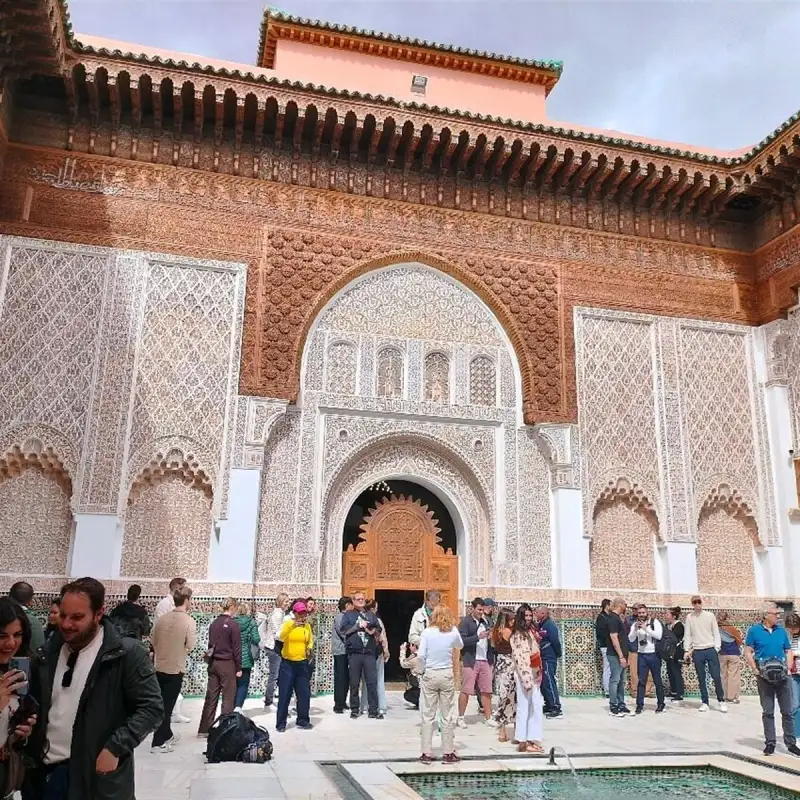
- Visit the Ben Youssef Madrasa
- A licensed local guide, no commission shops, and you pay on the day
A Marrakech religious heritage tour helps you understand a thousand years of faith in the city. Your private guide walks you past minarets, through a historic madrasa and into the old Jewish quarter. Each stop comes with calm, factual explanation.
Many visitors are unsure what they can enter or how to behave. Your guide answers those questions before they arise. The tour is respectful and open to all beliefs. Prices start from €30 per person.
1Islamic architecture and faith in Marrakech
Marrakech grew around its mosques and schools. The Koutoubia minaret, for example, still guides the eye across the city. Your guide explains how its design influenced others in Morocco and Spain, and why it has stood for centuries.
You also learn how daily life follows the call to prayer, from the opening of shops to the sound of the evening. These details turn buildings into living places. They also help you plan your own days in the city.
2What visitors can and cannot enter
Most mosques in Morocco are not open to non-Muslims. The Koutoubia mosque is one of them, so we see it from outside and its gardens nearby. This is normal, and your guide explains the reasons without fuss.
Other places do welcome visitors, such as the Ben Youssef Madrasa and the Almoravid Koubba. Your guide also takes you to the Mellah, where you can learn about the synagogue and Jewish heritage. Rules can change, so your guide confirms access on the day.
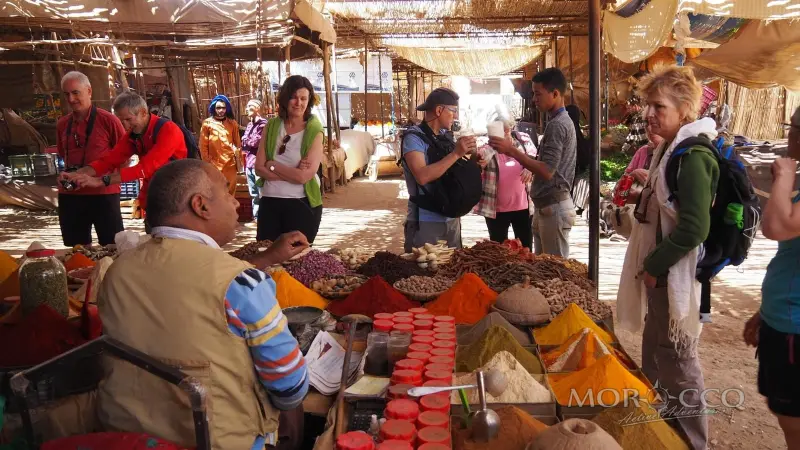
Stress-free sightseeing without touts or harassment
Religious sites draw crowds, and crowds draw touts. Visitors near mosques and shrines are sometimes told that a place is closed, then led elsewhere. Others hear a request for money for a photo or a doorway.
A guide ends most of this. Yours politely declines, explains where you may and may not go, and keeps the group calm. You never need to argue, and you never feel unsure about the etiquette. We take no shop commission, and there are no shop stops on this route.
A local, licensed and knowledgeable religious heritage guide
Your guide is a licensed local who speaks with care about faith. They give history, not preaching. They can explain what a zaouia is, why pilgrims visit, and how Muslim, Jewish and Berber traditions shaped the city.
They also answer honestly. If a question is sensitive or has no single answer, your guide says that. You can ask openly, and nobody will judge you for not knowing.

5Dress, etiquette and practical tips
Cover your shoulders and knees, for men and women alike. A light scarf is useful if you wish to cover your head. Wear shoes that are easy to remove, since some places ask visitors to take them off.
We meet you at your riad or hotel, or at the nearest gate. The tour takes about three hours. Prayer times can affect access, so your guide sets the order of the stops on the day. Entrance tickets and donations are extra. Tell us in advance about mobility needs.