In short
- Marrakech is where we work every day.
- The medina of Fes el-Bali is one of the largest car-free old towns in the world, and it is a true maze.
- Chefchaouen is the blue town in the Rif mountains.
- Tangier sits where Africa meets Europe, and its history is layered.
A local guide in Morocco opens the doors of cities that can feel confusing at first. A guide explains the history, leads you through the medina and keeps unwanted offers away. This matters in Fes, Marrakech and Chefchaouen, where the old towns have no clear street grid.
Guiding Marrakech is based in Marrakech. We also can arrange a local guide in other Moroccan cities, and we explain below what to expect in each. Ask us on WhatsApp and we tell you honestly what is possible on your dates.
Local guide in Marrakech
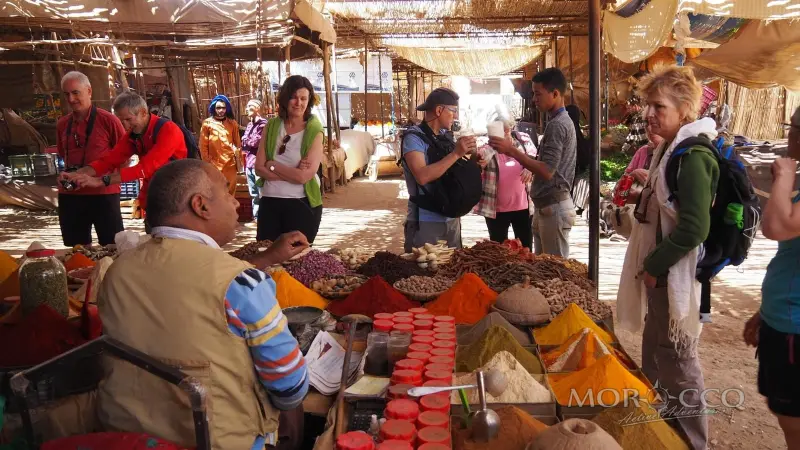
Marrakech is where we work every day. Our licensed local guides lead medina walks, historical tours, food tours and private tours of four or eight hours. They know the souks, the palaces, the gardens and the quiet corners.
A Marrakech tour guide also protects you from the pressure that visitors often mention. We do not use commission shops. Read more about our tours on this site, or start with the medina walk or the private guide.
If you are planning a trip to several cities, start your journey here. Our team can share advice on routes, timing and what to book in advance. Many travellers begin with a guided day in Marrakech to learn about the culture before they move on.
2Local guide in Fes
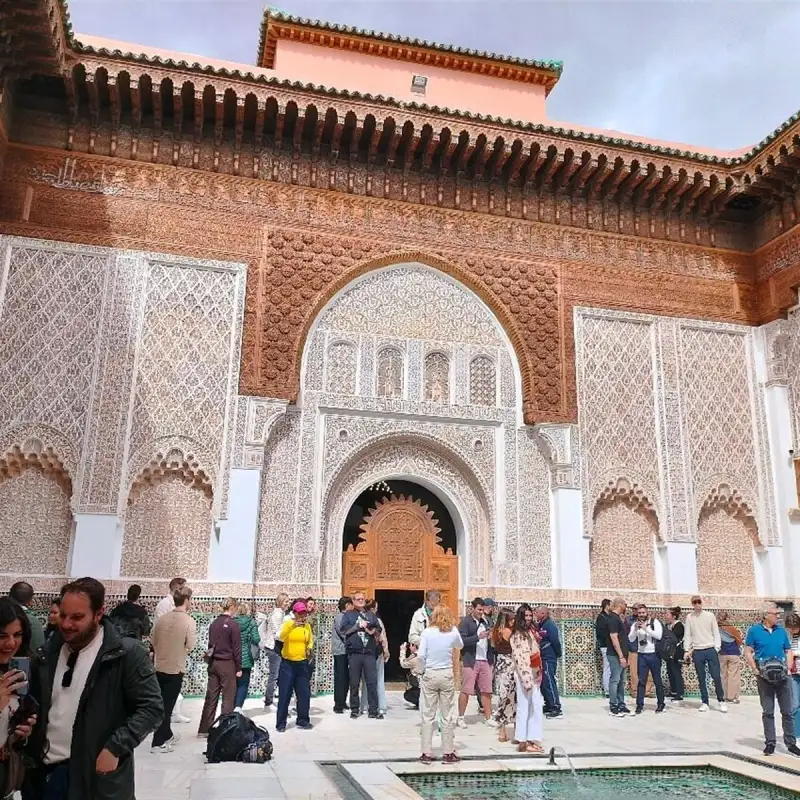
The medina of Fes el-Bali is one of the largest car-free old towns in the world, and it is a true maze. A local guide in Fes is almost essential for a first visit. The guide leads you to the medersas, the workshops of the craftsmen and the famous tanneries, and explains how the leather is made.
The Al Quaraouiyine mosque and university are not open to non-Muslims, but a guide shows you the exterior and the surrounding streets and explains their importance. A guide also keeps you away from fake guides and from sellers who lead you astray. We can arrange a local guide in Fes on request.
Fes is also the place for craft lovers. Your guide can take you to the potters, the weavers and the metalworkers, where you watch the work and decide in your own time whether to buy. A guide who respects your wishes keeps the day relaxed. In addition, the guide knows when the quieter hours are, so you avoid crowds.
3Local guide in Chefchaouen
Chefchaouen is the blue town in the Rif mountains. The medina is small, but the lanes are steep and twisting. A local guide in Chefchaouen takes you to the best photo spots and explains the stories behind the blue walls. You also learn about the local crafts and the cuisine.
Your guide can lead you to the Ras el-Maa waterfall area, where the town's water comes from, and to the Spanish Mosque viewpoint above the town. The walk to the viewpoint is best at sunset. Ask us about a guided tour in Chefchaouen and we will check availability.
The town is easy to love, but it gets busy at midday. Therefore, a local guide often starts early, when the light is soft and the lanes are quiet. The guide also knows the small cafes and the bakeries. If you want to extend the trip, hikes in the Rif mountains start from the town.
4Local guide in Tangier
Tangier sits where Africa meets Europe, and its history is layered. A private guide in Tangier shows you the kasbah, the old medina and the viewpoints over the Strait of Gibraltar. Many visitors also stop at the American Legation museum, the first American public property abroad.
Outside the city, a guide can take you to Cap Spartel and the Caves of Hercules. These sites are easier with a driver who knows the roads and the opening times. We can arrange a local guide in Tangier. Ask us on WhatsApp.
Tangier is also a literary and artistic city. A guide can point out the cafes that writers and painters used, such as in the Petit Socco area, and explain how the city was once an international zone. This adds colour to a short visit, especially if you arrive by ferry from Spain.
5Local guide in Essaouira
Essaouira is a calm, windy coastal town with a small medina that is easy to walk. A local guide in Essaouira adds the history and the stories of the port, the Skala ramparts and the blue fishing boats. You see the fish market and the carpenters who work with thuya wood.
Many visitors also ask for an argan visit, where women's cooperatives crush the nuts and explain the oil. Essaouira is about a three-hour drive from Marrakech, so a day trip with a guided tour in Essaouira is possible. Ask us for details.
Essaouira also suits a slow day. A guide can show you the quiet lanes behind the ramparts, the small art galleries and the best places for fresh fish at the port. Because the town is compact, a guided walk of two to three hours covers the main sights comfortably, and you can then relax by the sea.
6Local guide in Merzouga and the Erg Chebbi dunes
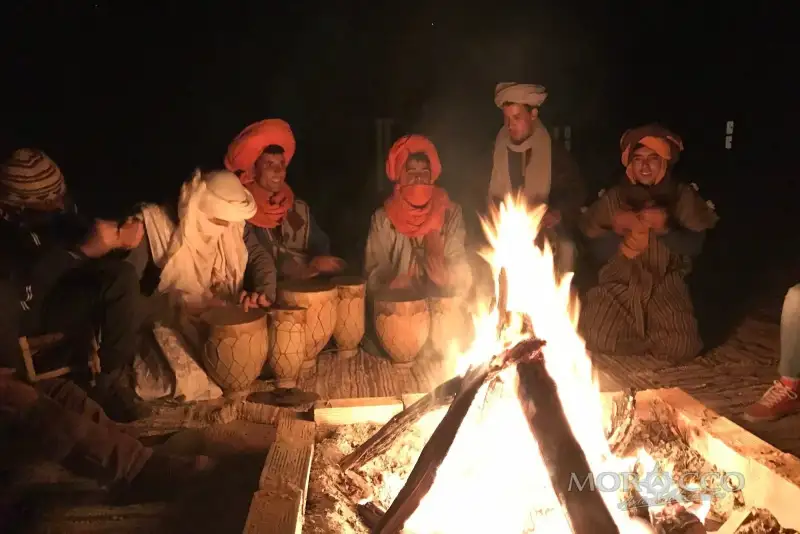
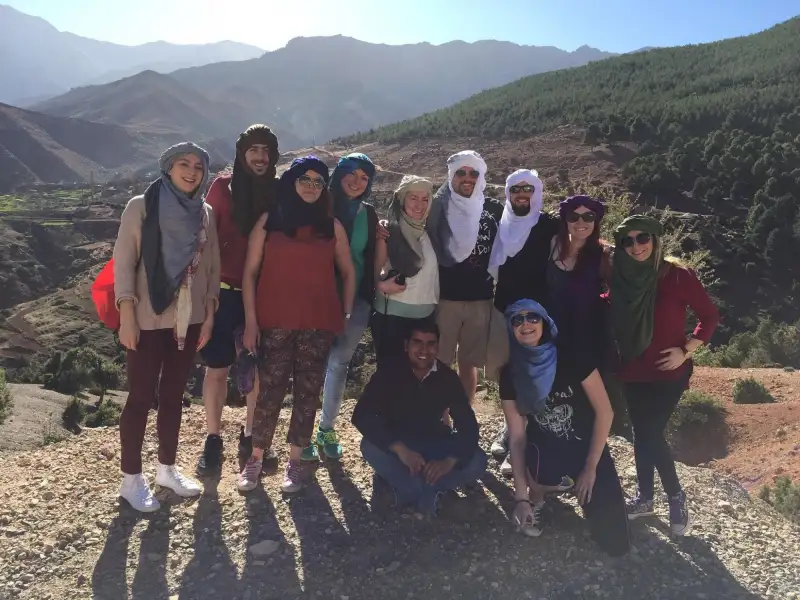
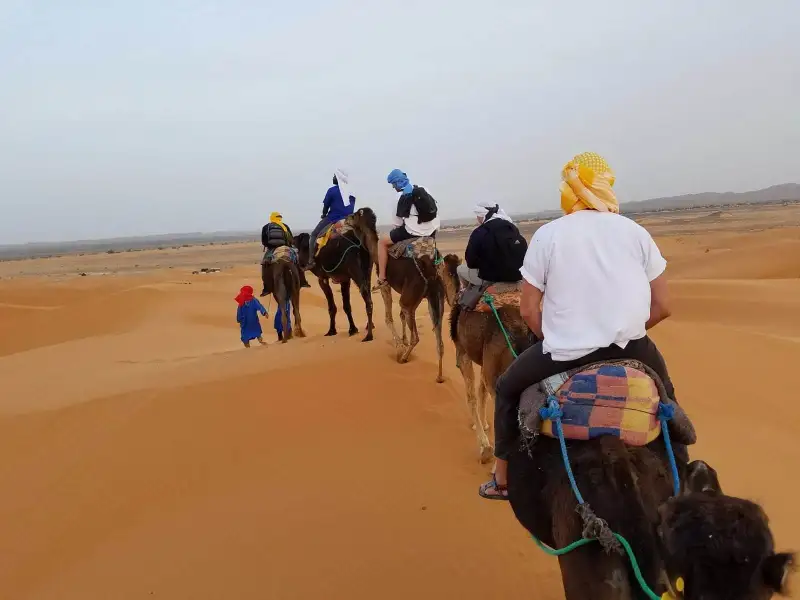
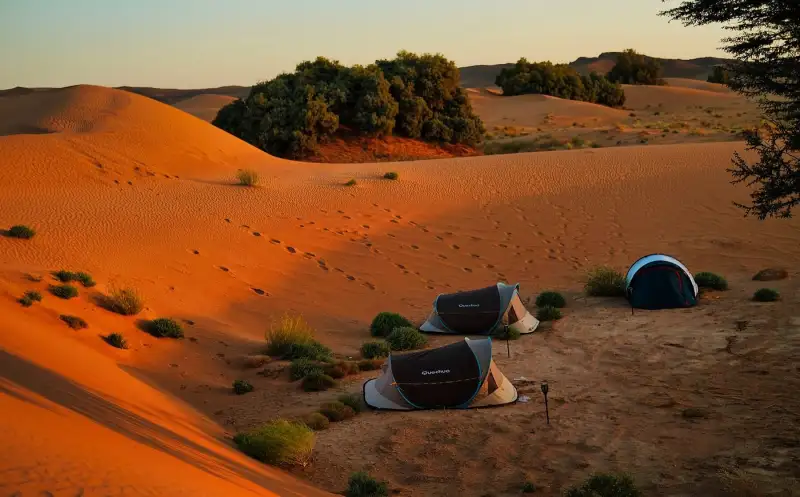
Merzouga sits at the edge of the Erg Chebbi dunes in the south-east. It is about eight to nine hours by road from Marrakech, so most people stay at least one night. A local desert guide leads the camel trek at sunset, explains the landscape and stays with you in camp.
The guide can also arrange a visit to a nomad family, where you share tea and learn about desert life. The people there know the dunes, the weather and the best viewpoints. We can arrange a local guide in Merzouga as part of a longer trip. Ask us.
Safety and comfort matter in the dunes. A good desert guide knows the right time to climb, the right place for sunset and how to look after tired travellers. The guide also helps with cultural questions and photography. As a result, the desert is a relaxed experience rather than a rushed one.
7Sahara desert guide: what to expect
A Sahara desert guide does more than lead camels. The guide checks the weather, manages the water, chooses safe routes and looks after the group. In summer, the heat is extreme, so a guide plans the timing carefully. In winter, the nights are cold, and a guide makes sure you have blankets.
Many travellers ask about Merzouga and Zagora. Merzouga has the tall, golden dunes of Erg Chebbi and is farther away. Zagora is closer to Marrakech, with a different, flatter landscape. Choose Merzouga if you want large dunes and can spare more days. Choose Zagora if your time is short.
8Local guide in Casablanca
Casablanca is a modern, busy city. Its top sight is the Hassan II Mosque, one of the largest in the world. Non-Muslims can enter only on a guided visit, so a local guide in Casablanca is the easiest way to see the inside. The guide also explains the art deco buildings and the old medina.
We can arrange a local guide in Casablanca if you start or end your trip there. Ask us on WhatsApp.
9Local guide in Rabat
Rabat is the capital, and it feels calm compared with other cities. A local guide in Rabat takes you through the Kasbah of the Udayas, the Hassan Tower and the mausoleum of Mohammed V. The guide also explains the role of the monarchy and the modern city.
We can arrange a local guide in Rabat on request. It is a good stop between Casablanca and Fes.
Rabat also has the Chellah, an old necropolis with Roman and medieval ruins and a colony of storks. A guide explains how the layers fit together. Furthermore, the modern city has wide boulevards and museums that are easy to enjoy at a gentle pace. Many travellers pass through Rabat on the train between Casablanca and Fes or Tangier.
10Local guide in Meknes
Meknes was a royal capital under Moulay Ismail. A local guide in Meknes shows you the grand gates, the old granaries and the stables, and explains the history of the sultan. The medina is quieter than Fes and easier to walk.
Many travellers also visit the Roman site of Volubilis from Meknes. A guide adds meaning to the ruins and the mosaics. We can arrange a local guide in Meknes. Ask us.
11Local guide in Ouarzazate and Ait Ben Haddou
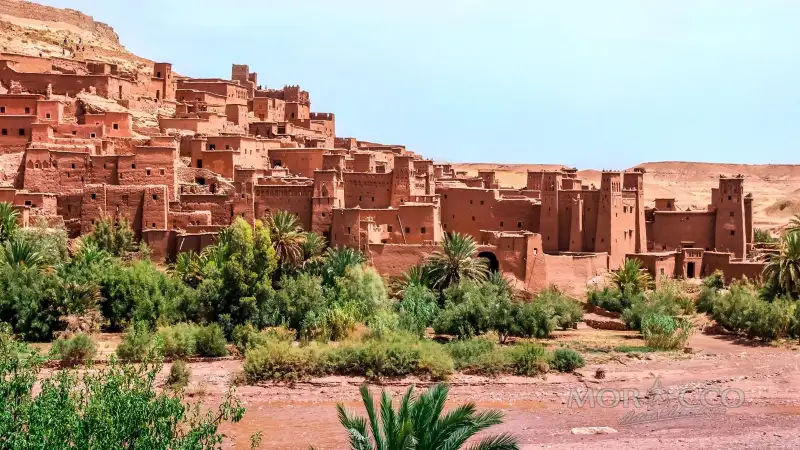
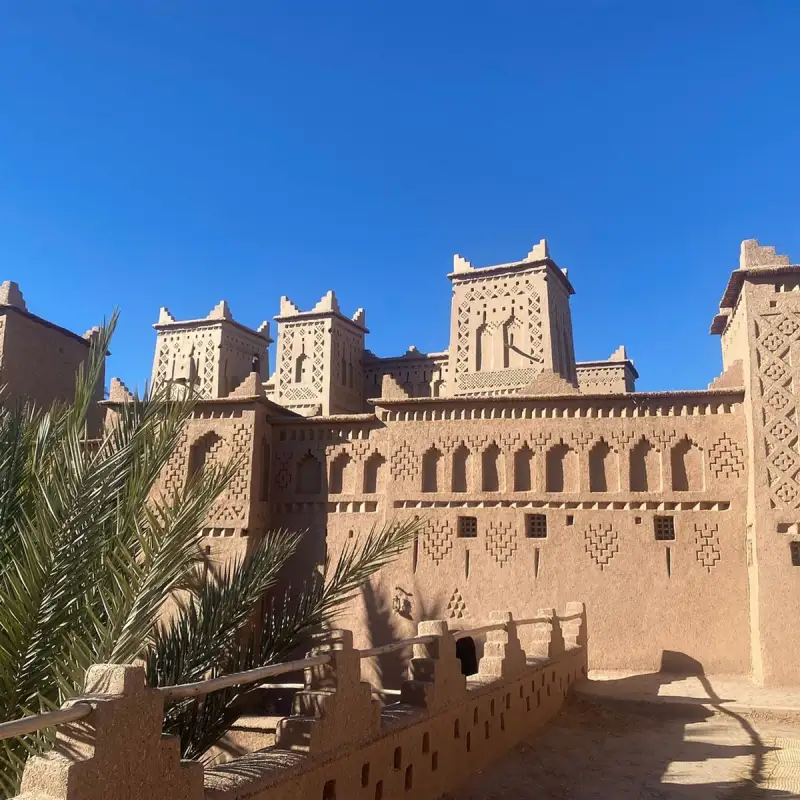
Ouarzazate is the gateway to the desert and to the kasbahs of the south. A local guide in Ouarzazate explains the film history of the area and takes you to the Taourirt Kasbah. The village of Ait Ben Haddou is a UNESCO World Heritage site, and a guide helps you read the clay architecture.
The drive from Marrakech crosses the High Atlas, so many people combine it with a trip to the desert. We can arrange a local guide in Ouarzazate and Ait Ben Haddou. Ask us on WhatsApp.
Along the way, a guide can also stop at a family-run kasbah, explain how the clay is made and show the palm groves. This helps you understand why the south looks so different from Marrakech, and why the villages were built where they are.
12Local guide in the Atlas Mountains
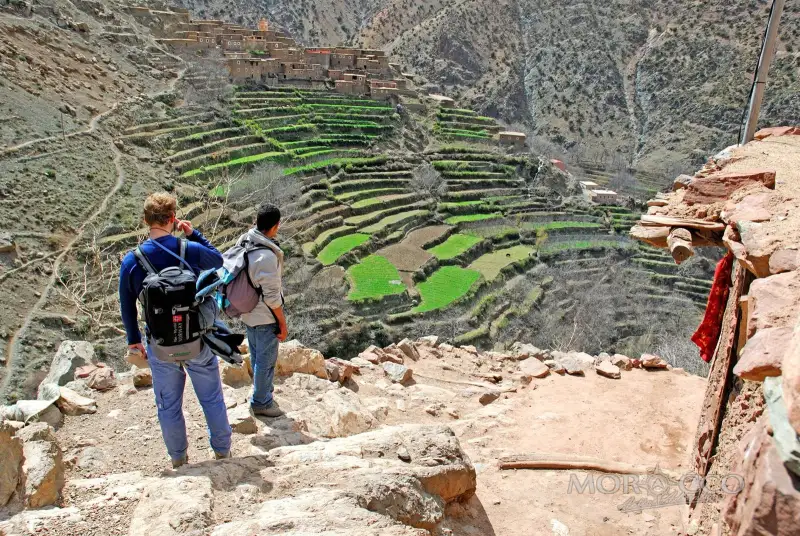
The Atlas Mountains are close to Marrakech, and they offer fresh air and Berber villages. A mountain guide knows the trails, the weather and the local families. Mountain guides hold specific qualifications, so ask us for details before you plan a trek.
For an easy day, you can visit a village and take a short walk in a valley. For longer treks, you need a qualified mountain guide. We can arrange this on request.
Berber villages in the High Atlas, such as those near Imlil, welcome visitors for tea and a walk. A local guide explains customs and translates, which makes the visit warmer for everyone. Please wear sturdy shoes and bring layers, because the weather in the hills changes quickly.
13Private driver-guides for multi-city trips
A private driver-guide combines a driver and a guide in one person. This option suits trips between several cities, such as Marrakech, the desert and Fes. The driver-guide handles the roads, explains the places on the way and saves you from changing transport.
It is a comfortable option for families and small groups. However, a driver-guide is not always licensed to guide inside every monument. In that case, a local guide in each city can join. Ask us how to combine them.
We help you plan the route, the stops and the length of each day. Typical combinations include Marrakech to the desert via Ouarzazate, or Marrakech to Fes through the Middle Atlas. Because the distances are long, we suggest a pace that is realistic. Tell us your dates and we answer honestly.
14How to recognise a licensed local guide in Morocco
Licensed guides carry an official card from the tourism authorities. Ask to see the card, and check that it has the guide's photo and name. A licensed guide also gives you a clear price before you start.
Be careful with anyone who approaches you in the street and insists on guiding you. Book in advance when you can. You can also ask your riad or hotel to recommend a guide they know. If in doubt, ask us.
A good guide also introduces themselves, explains the plan and agrees the price before the tour starts. You should feel free to ask questions and to say no to stops that do not interest you. If a guide pushes you to buy, speak up. Our guides never do this, and we want you to expect the same everywhere.
15Do you need a local guide in Morocco?
You do not need a guide for the whole trip. Many travellers use a guide in the old medinas of Fes and Marrakech and explore alone elsewhere. A guide is most useful in big mazes, historic sites and remote areas like the desert.
In the desert and the mountains, a guide is also a safety matter. For city sights with clear signs, you can go alone. Tell us your route, and we will suggest where a guide is worth it.
Before you travel, think about your own wishes. Do you want history, photos, food or adventure? Are you travelling with children or older relatives? Your answers help us match the right guide to the right city. We then tell you honestly which cities we can cover on your dates.